
Delft
Seven Wells Beach (Delft)
The western shore of Neduntheevu — named for the freshwater wells used by the wild horses and the islanders, fronted by a long quiet beach.
November to March; arrive mid-morning on the day's tractor circuit
Best time to visit
Open landscape; visit timed by the ferry from Kurikadduwan
Opening hours
Free
Entrance fee
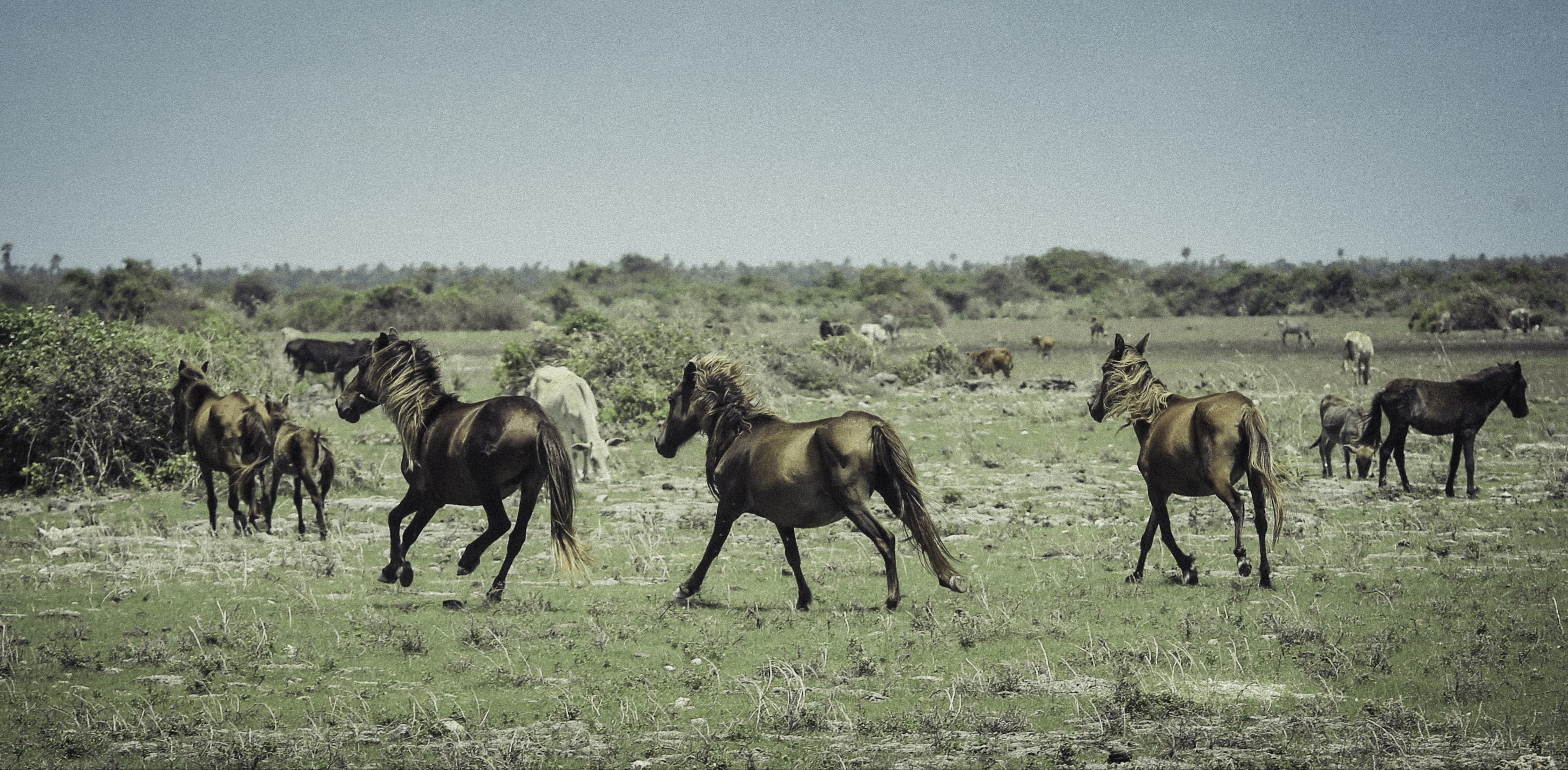
Seven Wells Beach runs along the western shore of Delft, on the side of the island that faces the open Palk Strait. The name is literal: seven freshwater wells, dug or formed naturally in the coral substrate, lie a short distance inland from the shore. They have been the principal water source for the island's wild horses and for the inland village houses for centuries. The wild herd drifts down to drink at them in the cooler hours of the day.
The beach itself is long, flat, almost completely empty, and made of the same crushed-coral and shell sand that lines the rest of the island. There are no facilities — no shacks, no shade, no rental of any kind — and no one else there for most of the year. The water shelves slowly and is calm enough on most days for a wade or a brief swim, though the open exposure to the Palk Strait means conditions change quickly when the wind comes up. There is no lifeguard.
On the standard tractor circuit, Seven Wells is the western-most stop. Drivers usually allow half an hour — long enough to walk the wells, watch for horses if they happen to be in, and stand on the beach for a while. Most visitors do not swim; the time pressure of the 2 p.m. ferry back to Kurikadduwan tends to keep the visit short.
The light here in the late morning is the most difficult of the day on Delft — direct, hot, and flat over the open water. The earliest possible visit, on the morning ferry circuit, gives you the best chance of softer light and active horses at the wells.
Pair Seven Wells with the wild horses (which often graze in the same area) and with the Queen's Tower, which sits a couple of kilometres inland.
What to know
Visiting quietly
- Best season
- November to March; the Palk Strait is calmest in these months
- Etiquette
- Do not bathe in or pollute the freshwater wells — they are the working water source for the wild herd and for the island. Do not approach horses that come down to drink. Take any rubbish off the island.
- Getting there
- 1.5 hours from Jaffna to the jetty, 50 minutes by ferry, then 30 minutes across the island
A closer look
Location
On the map

Practical things
Frequently asked
Can you swim at Seven Wells Beach?
Why is it called Seven Wells?
Are the wild horses always at Seven Wells?
Planning a visit to Seven Wells Beach (Delft)?
Begin a quiet conversation
Enquire about an Abbiholiday villa nearby and Abbi will help you plan your trip to the North.
We reply within 24 hours, usually within a few hours.Your enquiry comes straight to Abbi's inbox.