
Delft
Delft Coral Walls
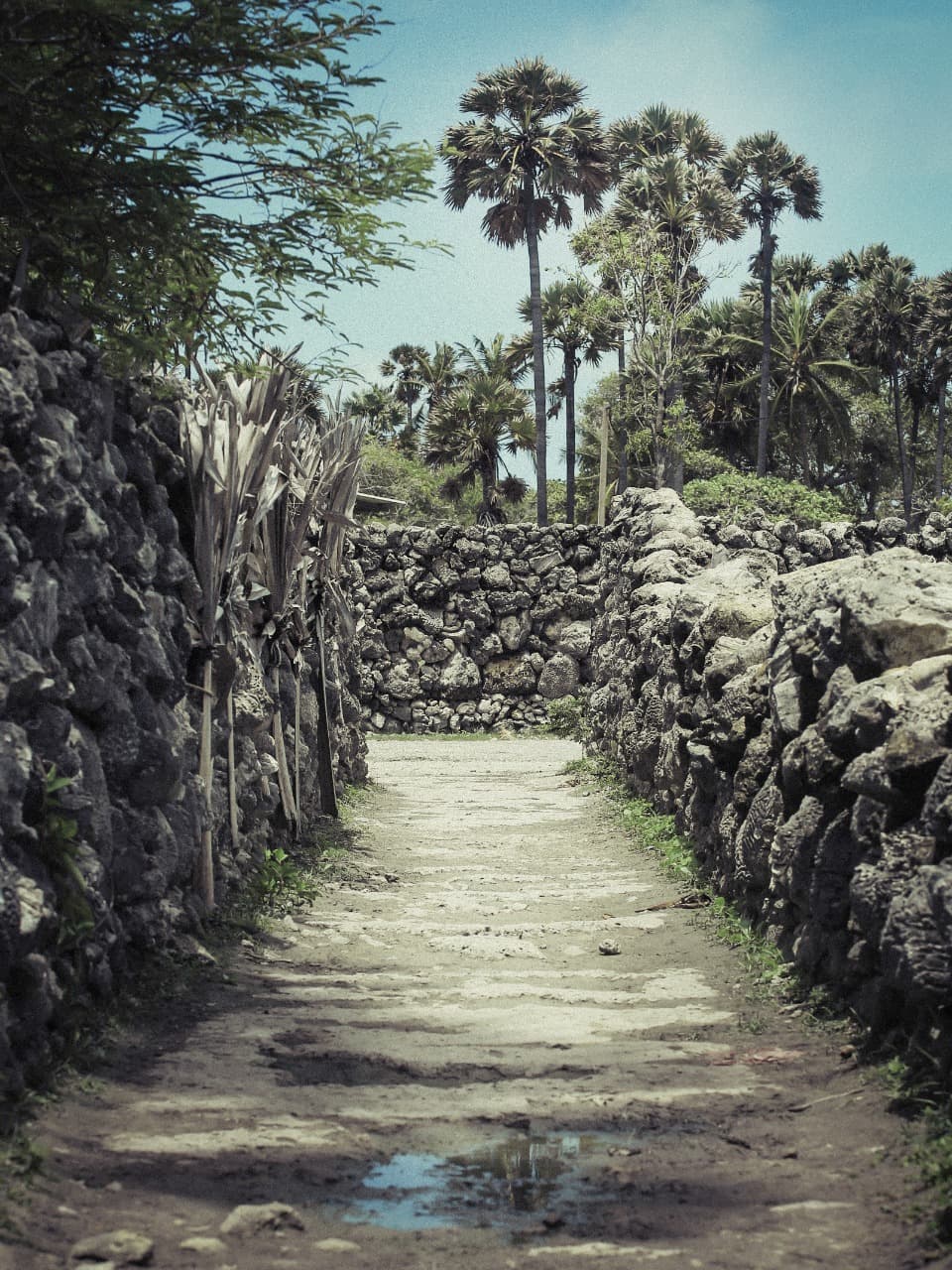
Field boundaries built from coral rubble — the only stone available on Neduntheevu — running for kilometres across the open island.
November to March; late morning on the standard tractor circuit
Best time to visit
Open landscape; visit timed by the ferry from Kurikadduwan
Opening hours
Free
Entrance fee
What strikes most visitors first about the interior of Delft is the walls. They run across the open scrubland in long straight lines and tight rectangles, dividing one grazing plot from the next, marking the field boundaries of a small-scale agricultural economy that has worked the island for centuries. They are built entirely from coral rubble — broken white-grey blocks lifted off the surrounding reef flats and stacked dry, without mortar, into chest-high enclosures.
There is a practical reason for this. Delft has no granite, no basalt, no laterite — none of the building stones used elsewhere on the peninsula. The only material the island offers in any quantity is coral, exposed across the reef flats and easily quarried by hand. Every stone structure on Delft, from the Portuguese fort by the jetty to the British navigation tower inland to the boundary walls between fields, is built from the same source. The walls are the most ordinary expression of it and, for that reason, the most telling.
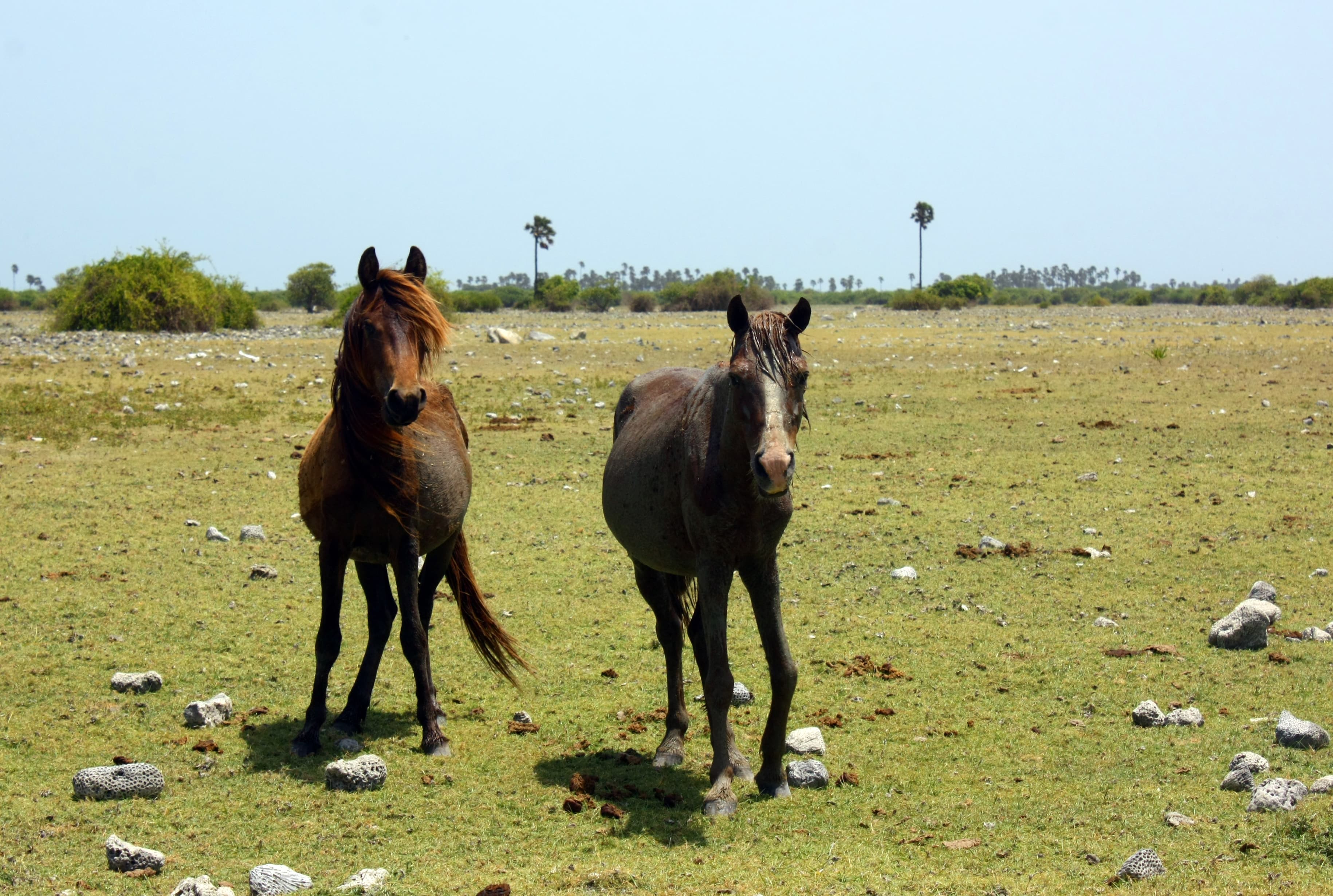
They serve a working purpose. The semi-wild horses graze freely across the open commons but are kept out of the smallholdings of cultivated land — palmyra, the occasional patch of vegetables, the household gardens of the inland villages — by the walls. Some are old; some are recent rebuilds where a section has collapsed; the construction technique has not changed in centuries.
Walk along a section if the tractor stops near one. The blocks are pitted by sea air, lichen-mottled, and surprisingly stable when stacked correctly. The longer walls run in straight lines for several hundred metres and frame the open landscape into a sequence of geometric panels.
The coral-wall country is most photogenic in the long light of late afternoon — a couple of hours before the return ferry at 2 p.m. The morning circuit reaches it after the fort and the baobab.
What to know
Visiting quietly
- Best season
- November to March, when the tractor tracks across the interior stay passable
- Etiquette
- Do not climb the walls or pull stones from them. They are working field boundaries, and the dry-stone construction relies on every block staying in place.
- Getting there
- 1.5 hours from Jaffna to the jetty, 50 minutes by ferry, then on the island circuit
A closer look
Location
On the map
Nearby
On the same circuit


Practical things
Frequently asked
Why are the field walls on Delft made of coral?
Are the coral walls historic?
Planning a visit to Delft Coral Walls?
Begin a quiet conversation
Enquire about an Abbiholiday villa nearby and Abbi will help you plan your trip to the North.
We reply within 24 hours, usually within a few hours.Your enquiry comes straight to Abbi's inbox.