
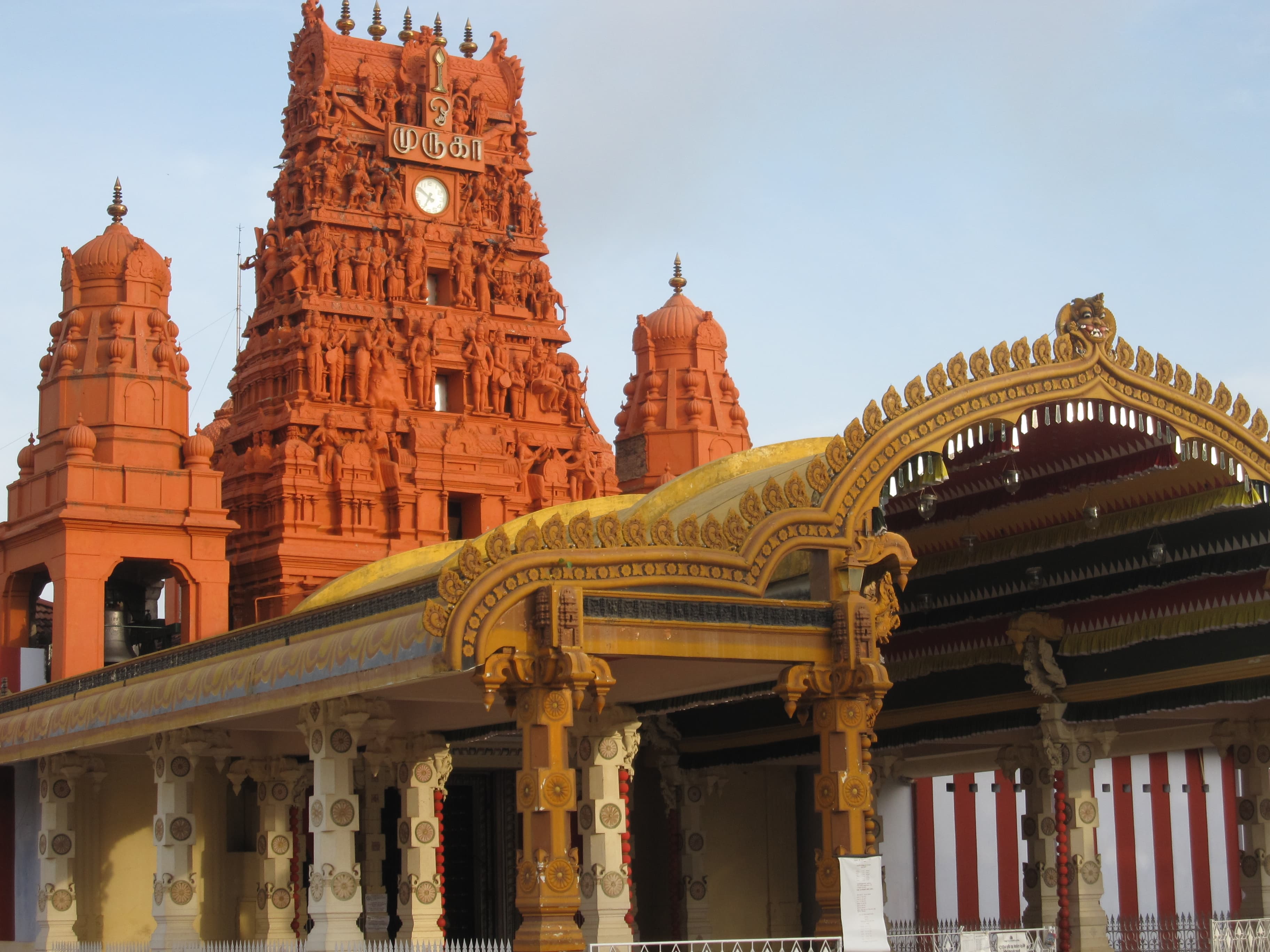
Vallipuram
Vallipuram Alvar Vishnu Kovil
The principal Vishnu temple of the North — a Vaishnava sanctum near the eastern coast where a second-century gold plate inscription was unearthed in the late nineteenth century.
November to March; or during the Aavani Mahotsavam in August–September
Best time to visit
6 a.m. – 12 p.m. and 4 p.m. – 8 p.m. daily
Opening hours
Free; donations welcomed
Entrance fee
Vallipuram Alvar Kovil stands a few kilometres inland from the eastern coast of the Vadamarachchi peninsula, near the village of Vallipuram. It is the principal Vaishnava temple of the Jaffna peninsula — a comparative rarity in a region that is overwhelmingly Saivite — and the focus of devotion to Vishnu in the form of Alvar, a name that links the shrine to the broader South Indian tradition of the twelve Alvar poet-saints whose Tamil hymns shaped medieval Vaishnava worship.
The temple's antiquity is established by one of the more important epigraphic finds of Sri Lanka. In 1936 a small inscribed gold plate, now known as the Vallipuram gold plate inscription, was recovered from the temple grounds. Palaeographers date the script to the second century CE, and the text records the construction of a Buddhist vihara at the site — known then as Badakaratitha — under a king referenced as Vahaba (often identified with Vasabha of Anuradhapura). The find indicates that the location was a settled and significant religious site at least eighteen centuries ago, and that its religious affiliation has shifted across the long arc of Northern history. The plate itself is held in the National Museum.
The current temple is a Vaishnava structure of the late medieval and modern period. The principal sanctum holds Vishnu — locally addressed as Alvar — in the standing form, with subsidiary shrines for the consort goddesses Sridevi and Bhudevi, for Garuda the eagle vehicle, and for Hanuman. The architectural vocabulary is South Indian Dravidian, with a modest gopuram over the main entrance and a colonnaded mandapam leading to the inner sanctum. A bronze utsava-murti (festival image) is processed during the annual chariot festival.
The annual Mahotsavam runs in the Tamil month of Aavani (August–September), with the chariot procession one of the most attended Vaishnava observances of the North. Saturdays and the auspicious Vaishnava month of Purattasi (September–October) draw the largest weekday congregations. Outside these times the temple is quiet and rewards a slow visit; the eastern coast is within a short drive, and Manalkadu and Point Pedro can be linked into the same day.
For the visitor familiar with the great Vaishnava shrines of South India — Srirangam, Tirumala, the Divya Desams of Tamil Nadu — Vallipuram is a smaller and more intimate sanctum, but it occupies a comparable place in the religious geography of the Sri Lankan Tamil tradition.
What to know
Visiting quietly
- Best season
- November to March; or for the Aavani Mahotsavam in August–September
- Etiquette
- Cover shoulders and knees. Shoes off at the outer gate. Men typically remove shirts before the inner sanctum. No photography inside the sanctum.
- Getting there
- 1 hour 15 minutes from Jaffna town by road
A closer look
Location
On the map
Nearby
On the same circuit


Practical things
Frequently asked
What is the Vallipuram gold plate?
Is Vallipuram a Vishnu or a Buddhist temple?
When is the Vallipuram chariot festival?
Planning a visit to Vallipuram Alvar Vishnu Kovil?
Begin a quiet conversation
Enquire about an Abbiholiday villa nearby and Abbi will help you plan your trip to the North.
We reply within 24 hours, usually within a few hours.Your enquiry comes straight to Abbi's inbox.