
Thondaimanaru
Selva Sannidhi Murugan Temple
A storied Murugan shrine on the northern coast of Vadamarachchi — pilgrim vows, the Skanda Sashti festival, and a nineteen-day Mahotsavam in the Tamil month of Purattasi.
November to March; or for the Purattasi Mahotsavam festival in September–October
Best time to visit
5 a.m. – 12 p.m. and 4 p.m. – 8 p.m. daily
Opening hours
Free; donations welcomed
Entrance fee
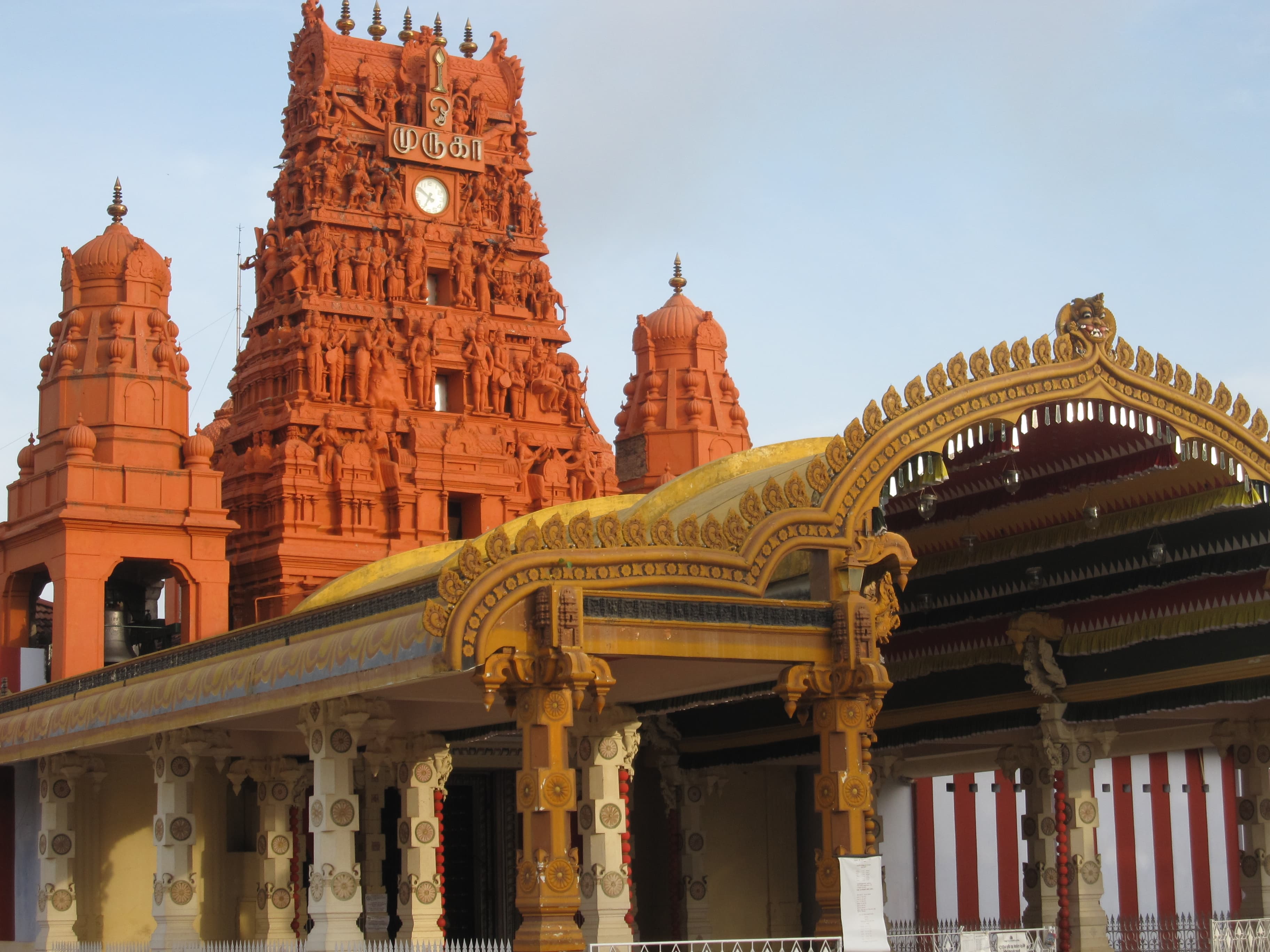
Selva Sannidhi stands at Thondaimanaru, on the northern coast of the Vadamarachchi peninsula, about thirty kilometres northeast of Jaffna town. It is among the most senior Murugan temples of the North, and its name — selva sannidhi, "the wealth-giving sanctum" — points to the temple's particular reputation as a place where vows made to Lord Murugan are believed to be answered. Within the Jaffna pilgrimage circuit, it sits alongside Nallur, Maviddapuram, and Veerasingham Vinayagar as one of the major Skanda shrines.
The temple's recorded history goes back to at least the seventeenth century, with a foundational legend that places its origin much earlier — local tradition associates it with the sage Arunagirinathar and with the medieval restoration of Saiva sites along the Jaffna coast. The structure was substantially expanded in the late nineteenth and twentieth centuries; the current rajagopuram, with its five-tier stack of painted figures over the main entrance, dates from this period of rebuilding. The inner sanctum holds Lord Murugan with his consorts Valli and Deivanai; subsidiary shrines house Ganesha, Shiva, and the navagraha.
The principal annual observance is the Mahotsavam, a nineteen-day festival in the Tamil month of Purattasi (September–October), which brings thousands of pilgrims to Thondaimanaru. The festival's most striking days are the chariot procession (ther thiruvizha), when the wooden temple chariot is hauled by hand along the coastal road, and the closing water-cutting ceremony (theerthavari) at the nearby Thondaimanaru lagoon, where the deity is taken in procession to the water. Skanda Sashti — the six-day Murugan observance in October or November — is also significant here, with continuous abhishekam, fasting, and the recitation of the Kanda Sashti Kavasam in the temple courtyard.
The atmosphere on an ordinary weekday is calm. The site is set back from the coast road in a sandy compound; a small bo and palmyra grove flanks the entrance. Pilgrims often arrive having driven the full length of the Vadamarachchi peninsula from Jaffna, stopping at Maruthanamadam and Nallur on the way. The dawn pooja at five-thirty is brief but well attended; the dusk pooja at six is the longer and more atmospheric of the two daily peaks.
For the visitor outside festival season, Selva Sannidhi pairs naturally with Point Pedro and the eastern coast — the temple, the lighthouse at the island's northern tip, and the Manalkadu dune church can be arranged as a single full-day route from Jaffna.
What to know
Visiting quietly
- Best season
- November to March; or for the Purattasi Mahotsavam in September–October
- Etiquette
- Cover shoulders and knees. Men typically remove shirts before the inner sanctum; women cover legs. Shoes off at the outer gate. No photography inside the sanctum.
- Getting there
- 1 hour from Jaffna town by road via Point Pedro road
A closer look
Location
On the map
Featured in these tours
Visit on a curated journey
7-8 hours
Northern Coast Temples, Springs & Beaches Tour
A full-day private coastal route linking sacred kovils, sea springs, Buddhist heritage, quiet beaches, and the northern shoreline.
See the tour →
4-6 hours
Private Jaffna City, Temples & Local Life Tour
A gentle, story-rich introduction to Jaffna through temples, markets, colonial history, Tamil culture, and local food stops.
See the tour →
Nearby
On the same circuit

Practical things
Frequently asked
What is Selva Sannidhi Murugan Temple known for?
When is the Selva Sannidhi festival?
Can non-Hindus visit Selva Sannidhi?
Planning a visit to Selva Sannidhi Murugan Temple?
Begin a quiet conversation
Enquire about an Abbiholiday villa nearby and Abbi will help you plan your trip to the North.
We reply within 24 hours, usually within a few hours.Your enquiry comes straight to Abbi's inbox.