
Nainativu
Nainativu Nagapooshani Amman Temple
One of the 64 Shakti Peethams — the goddess shrine of Nainativu, where the anklet of Sati is said to have fallen.
November to March; Aani Mahotsavam festival in June–July is the principal observance
Best time to visit
5 a.m. – 12 p.m. and 4 p.m. – 8 p.m. daily
Opening hours
Free; ferry to Nainativu approximately Rs 100 per person
Entrance fee
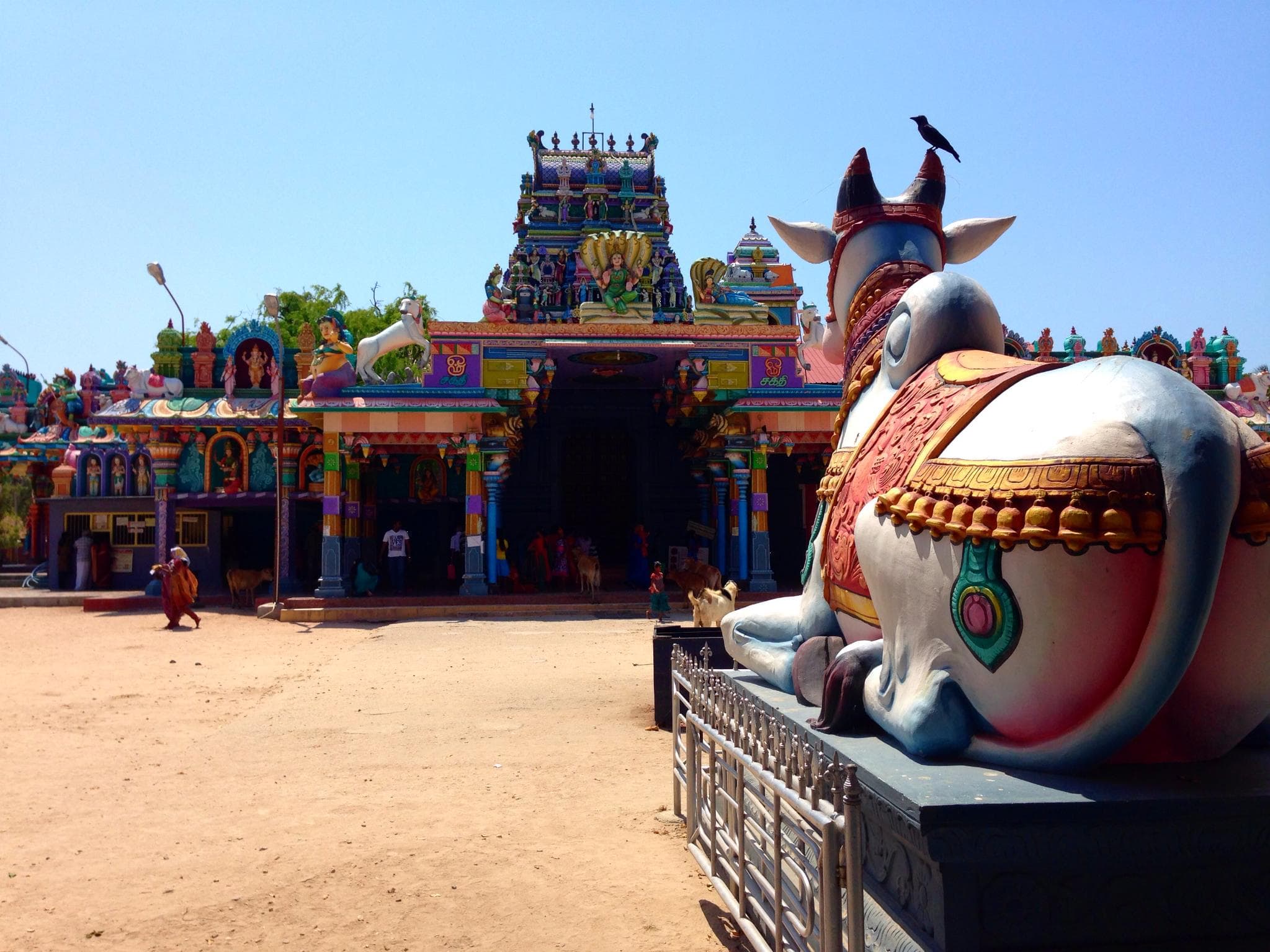
Nainativu Nagapooshani Amman Temple stands at the southern end of Nainativu island, a few hundred metres along the shore from the Buddhist Nagadeepa Vihara. Within the Shakta tradition it is venerated as one of the 64 — sometimes counted as 51 or 108 in different lists — Shakti Peethams: the network of goddess shrines that mark the places where, in the Daksha Yajna myth, the dismembered body parts of the goddess Sati fell to earth as Shiva carried them in his grief. Nainativu is the site associated with the falling of Sati's silambu, her anklet. The temple's principal deity is Nagapooshani, the form of Parvati who wears the snake as her ornament; her consort here is Rakshasewara Shiva.
The temple's red and white striped outer wall is visible from the ferry as it approaches the jetty. The principal east-facing rajagopuram rises above the pilgrim village in a stack of carved figures painted in confident colour — a tower in the South Indian Dravidian idiom, structurally close to the great gopurams of Tamil Nadu. The structure as it stands today is largely the result of 19th and 20th-century rebuilding; the original temple, like Naguleswaram and Nagadeepa, was destroyed by the Portuguese in 1620, with the present sanctum re-established in the late 18th century and progressively expanded since.
Inside, the spatial sequence is classic: an outer prakara, a flagstaff (kodimaram) facing the main shrine, a balipeetha and Nandi shrine, and the inner sanctum holding the goddess. There are subsidiary shrines to Ganesha, Murugan, Bhairava, and the navagraha (the nine planetary deities). The temple operates on a six-pooja daily cycle, with the early morning and the dusk poojas the most attended. The atmosphere on a quiet weekday is unhurried; on a festival day or a Friday — auspicious to the goddess — it is dense with offerings, oil lamps, and the smell of roasted gram and jasmine from the stalls outside.
The annual Mahotsavam festival runs for sixteen days in the Tamil month of Aani (June–July), culminating in the Theerthotsavam — the holy bathing on the temple chariot day. During the festival the population of the small island multiplies several times over, and extra ferries run from Kurikadduwan from early morning until late at night. The temple's significance as a Shakti Peetham draws pilgrims from Tamil Nadu and from the Sri Lankan Tamil diaspora; among Hindus of the North, a visit to Nainativu is one of the most consequential pilgrimages of the year.
For the unhurried visitor, the early ferry is again the best choice. The walk from the jetty to the temple takes five minutes, past stalls selling coconut, banana, and the small clay oil lamps that pilgrims float as offerings. Pair the visit with the adjacent Nagadeepa Vihara and you have the spiritual centre of Nainativu in a single quiet half-day.
What to know
Visiting quietly
- Best season
- November to March; or during the Aani Mahotsavam festival in June–July
- Etiquette
- Cover shoulders and knees; men typically remove shirts at the inner sanctum. Shoes off at the outer gate. No photography inside the sanctum or of rituals in progress.
- Getting there
- 1 hour 15 minutes from Jaffna town to Kurikadduwan jetty, then 20 minutes by ferry
A closer look
Location
On the map
Nearby
On the same circuit


Practical things
Frequently asked
Why is Nagapooshani a Shakti Peetham?
What is the dress code at Nagapooshani Amman Temple?
Can you visit Nagapooshani and Nagadeepa in the same trip?
Planning a visit to Nainativu Nagapooshani Amman Temple?
Begin a quiet conversation
Enquire about an Abbiholiday villa nearby and Abbi will help you plan your trip to the North.
We reply within 24 hours, usually within a few hours.Your enquiry comes straight to Abbi's inbox.