
Nainativu
Nagadeepa Purana Vihara
The Buddhist island shrine commemorating the Buddha's second visit to Sri Lanka — one of the sixteen Solosmasthana places of pilgrimage.
November to March; Vesak full moon in May for the principal festival
Best time to visit
Roughly 7 a.m. – 6 p.m., aligned with ferry hours
Opening hours
Free; ferry to Nainativu approximately Rs 100 per person
Entrance fee
Nagadeepa Purana Vihara stands on the small island of Nainativu, off the western coast of the Jaffna peninsula, and is recognised within Sri Lankan Buddhist tradition as one of the sixteen Solosmasthana — the principal places of pilgrimage that mark the Buddha's three visits to the island. The Mahavamsa, the fifth-century Pali chronicle of Sri Lanka, records that the Buddha came here in the fifth year after his enlightenment to mediate a dispute over a jewelled throne between two Naga kings, Chulodara and Mahodara. The throne was offered to him in gratitude and is said to have been enshrined at the spot where the present temple stands.
The Vihara complex is modest in scale — a silver-painted dagoba, a Bo tree, a small image house, and a Sangamitta shrine that ties the site to the wider story of the Bo sapling — but its position is striking. The temple sits a few hundred metres from the Nainativu jetty, on a low headland looking out across the shallow channel that separates the island from the peninsula. The original structure, like most ancient Buddhist sites of the North, was destroyed during the Portuguese period in the early 17th century. Reconstruction began under colonial-period revivalist Buddhists and continued, with significant patronage, after independence.
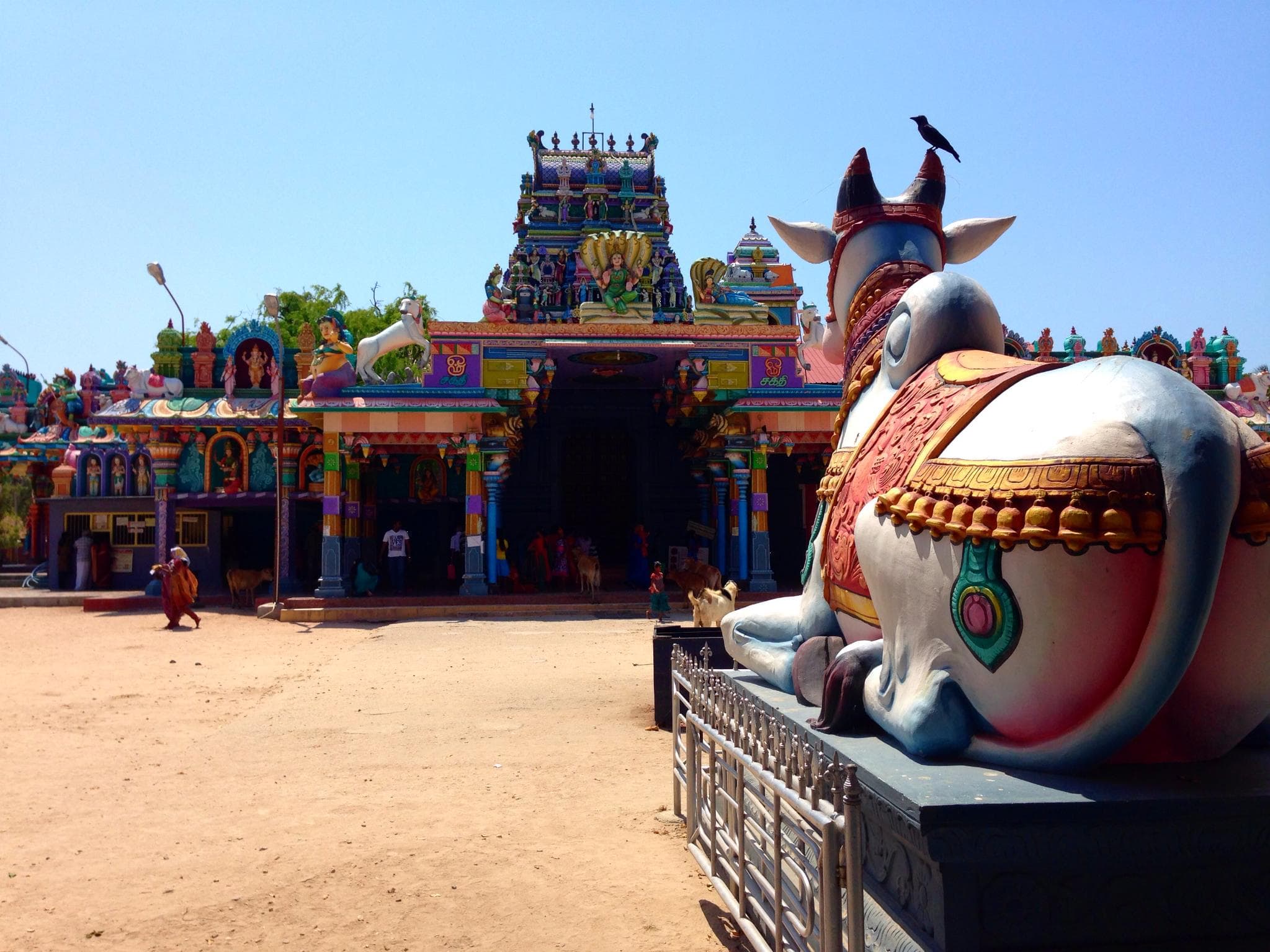
The same island holds Nainativu Nagapooshani Amman Temple, one of the 64 Shakti Peethams of the Hindu tradition, a few hundred metres along the shore. The proximity is one of the more remarkable features of Sri Lankan religious geography: a major Buddhist pilgrimage site and a major Hindu pilgrimage site sharing an island the size of a small village, served by the same ferry, visited by overlapping streams of pilgrims through the same days. Most visitors take in both during a single morning crossing.
The principal observance at Nagadeepa is the Vesak full moon in May, when the dagoba is illuminated and large numbers of pilgrims arrive on extra ferry services laid on for the festival. Poson in June, marking the introduction of Buddhism to Sri Lanka, also draws significant numbers. Outside these dates, the Vihara is quiet and the visit is essentially contemplative — a slow circumambulation of the dagoba clockwise, a pause at the Bo tree, a few minutes in the image house, and the boat back.
Ferries to Nainativu run from Kurikadduwan jetty (KKD), at the western tip of Punkudutivu island, with the first crossing usually at seven in the morning. The journey is about twenty minutes each way. The temple ground is uncovered and the sun on the white-painted dagoba is fierce by ten; the early ferry rewards itself.
What to know
Visiting quietly
- Best season
- November to March; or Vesak full moon in May
- Etiquette
- Cover shoulders and knees; remove shoes and hats before approaching the dagoba and image house. Walk clockwise around the dagoba. Speak softly inside the precincts.
- Getting there
- 1 hour 15 minutes from Jaffna town to Kurikadduwan jetty, then 20 minutes by ferry
A closer look
Location
On the map


Practical things
Frequently asked
What is the significance of Nagadeepa?
How do you reach Nagadeepa from Jaffna?
Can you visit Nagadeepa and Nagapooshani together?
Planning a visit to Nagadeepa Purana Vihara?
Begin a quiet conversation
Enquire about an Abbiholiday villa nearby and Abbi will help you plan your trip to the North.
We reply within 24 hours, usually within a few hours.Your enquiry comes straight to Abbi's inbox.