
Chundikulam
Chundikulam National Park
A wetland on the Jaffna–Kilinochchi border declared a national park in 2015 — flamingos, painted storks, herons, deer, and almost no visitors.
November to March for migratory birds and dry tracks
Best time to visit
Approx. 6 a.m. – 6 p.m. through the park gate; check on the day
Opening hours
DWC park entry fee plus jeep + tracker hire arranged at the gate (approx. USD 15–25 per person depending on group size)
Entrance fee
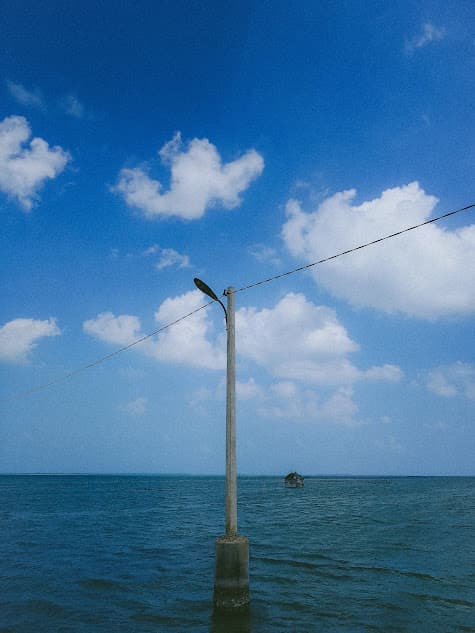
Chundikulam lies at the eastern end of the Jaffna Lagoon, on the narrow strip of land that separates the lagoon from the Bay of Bengal. The area was a designated bird sanctuary from 1938; in 2015 the central core of the wetlands was upgraded to a national park, covering roughly twelve thousand hectares of lagoon, mangrove, scrub, and coastal dune.
The wetlands hold one of the most significant concentrations of waterbirds on the island. Greater flamingos arrive in numbers between November and March; painted storks, openbill storks, herons, egrets, ibis, and a long roster of waders work the shallow margins; pelicans and cormorants fish the open lagoon. On the dry land side, spotted deer and wild buffalo are commonly seen, and the area is part of the wider elephant range that runs across the Northern and Eastern provinces.
Visitor infrastructure is very limited. There are no formal accommodation options inside the park, no visitor centre of substance, and no marked walking trails. Most visitors who come here hire a Department of Wildlife Conservation jeep and a tracker–guide at the entrance gate near Chundikulam village; the half-day drive through the park's accessible tracks is the standard way to see it. Independent walking is not permitted in the core zone.
The best months for the park are November to March, when the migratory birds are present and the tracks are dry enough for jeeps. The drive in from Jaffna takes about two and a half hours through Pallai and Mullaitivu; from Kilinochchi side the access is shorter. A long day is realistic from a Jaffna villa, but an overnight in the area allows the early-morning hours that the wildlife is most active in.
This is one of the quieter national parks in Sri Lanka. The infrastructure that surrounds Yala or Wilpattu is not here, and that absence is most of what brings the people who do come.
What to know
Visiting quietly
- Best season
- November to March, dry season with peak migratory bird presence
- Etiquette
- Stay inside the jeep on game drives. Keep voices low near feeding flocks. Do not feed any wildlife. Photography is permitted; flash and drones are not.
- Getting there
- 2.5 hours from Jaffna town via Pallai
A closer look
Location
On the map
Nearby
On the same circuit

Practical things
Frequently asked
Can you visit Chundikulam without a guide?
What's the best time of year for Chundikulam birdwatching?
How long does a Chundikulam day trip from Jaffna take?
Planning a visit to Chundikulam National Park?
Begin a quiet conversation
Enquire about an Abbiholiday villa nearby and Abbi will help you plan your trip to the North.
We reply within 24 hours, usually within a few hours.Your enquiry comes straight to Abbi's inbox.